
Turkish Tea Culture
If you have ever sat down at a Turkish restaurant and been handed a small tulip-shaped glass filled with deep amber liquid, you have already had your first encounter with one of the most important beverages in the world. Turkish tea, known in Turkey as çay, is not just a drink. It is a daily ritual, a social glue, a form of hospitality, and in many ways the heartbeat of Turkish daily life. It is consumed from morning until late at night, offered to guests within minutes of arrival, served in tea houses where men have been gathering for generations, and shared between strangers as a gesture of openness and welcome.
Understanding Turkish tea culture gives you a window into how Turkish people relate to each other and to time itself. In a world that increasingly values speed and efficiency, Turkish tea culture is built around the opposite idea. You sit. You drink slowly. You talk. You pour another glass. The tea is the reason to stay, and staying is the whole point.
For anyone interested in authentic Turkish food and culture in San Francisco or across the Bay Area, understanding çay adds depth to the dining experience in a way that goes well beyond what is on the plate.
The History of Tea in Turkey
Turkey was not always a tea-drinking nation. For centuries, coffee was the dominant hot beverage across the Ottoman Empire, and Turkish coffee houses were among the most important social institutions in cities like Istanbul, Bursa, and Izmir. The shift toward tea happened gradually and was driven by a combination of economic and political factors in the early 20th century.
After the fall of the Ottoman Empire and the founding of the Turkish Republic in 1923, coffee became expensive and difficult to import. The new Turkish government, under Mustafa Kemal Atatürk, actively encouraged the cultivation of tea as a domestic alternative. The eastern Black Sea region of Turkey, particularly the area around the city of Rize, turned out to have ideal conditions for growing tea. The climate is wet and mild, the soil is rich, and the hills slope in ways that allow for terraced cultivation. Tea plants took to the region quickly, and by the mid-20th century, Turkey had become one of the largest tea-producing countries in the world.
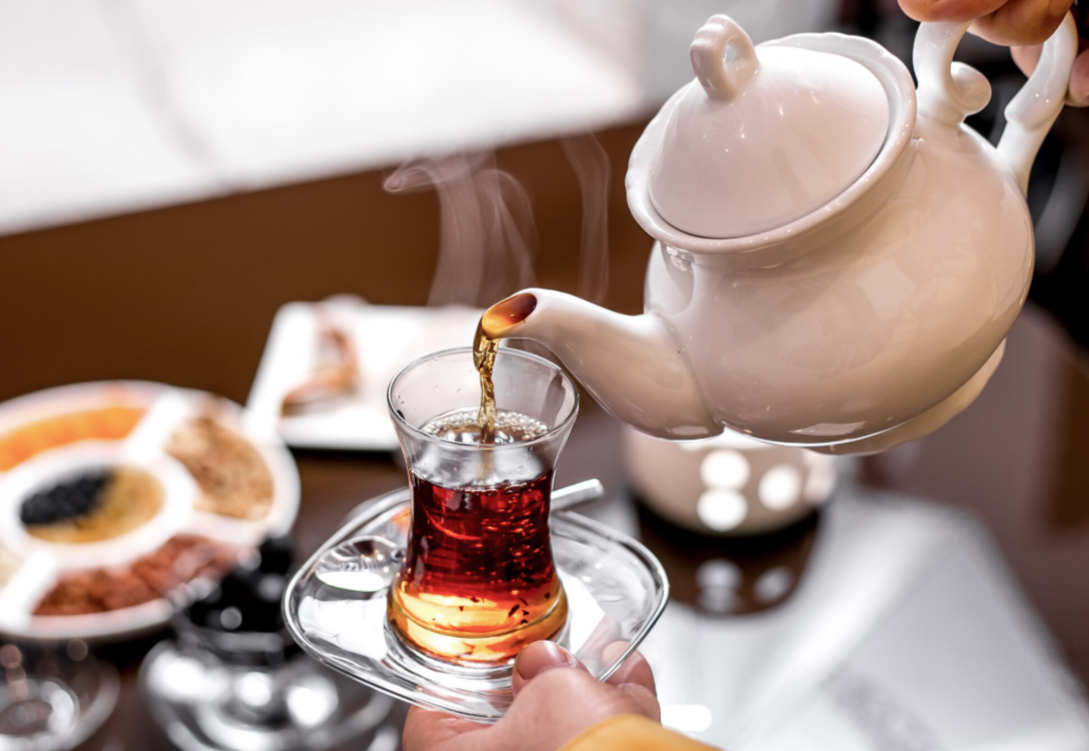
Today Turkey is consistently among the top five tea-producing nations globally, and Turkish people are among the highest per-capita tea consumers in the world. The average person in Turkey drinks somewhere between five and ten small glasses of tea per day, and that number is not an exaggeration. Tea is consumed at breakfast, between meals, after meals, in offices, on construction sites, in markets, and in dedicated tea houses called çay bahçesi, which translates to tea gardens, that serve as outdoor gathering spaces in nearly every Turkish neighborhood.
The tea grown in Turkey is a variety of Camellia sinensis, the same plant species used for all true teas including black, green, white, and oolong. Turkish tea is processed as a black tea and has a strong, robust flavor with natural astringency and a reddish-amber color when brewed correctly. It is grown without the addition of flavoring agents or additives, which makes it a clean, pure product that tastes distinctly of the plant itself rather than of anything artificial.
How Turkish Tea Is Brewed and Why the Method Matters
The brewing method for Turkish tea is completely different from the way most people in the West make tea, and the method is a significant part of what gives çay its distinctive character. Turkish tea is brewed using a two-tiered teapot called a çaydanlık. The bottom pot is larger and holds boiling water. The top pot is smaller and holds concentrated brewed tea. The two pots sit stacked on the stove together, with the steam from the boiling water below gently heating and keeping warm the brewed tea above.
To make the tea, loose black tea leaves are placed in the upper pot with a small amount of water and allowed to steep for fifteen to twenty minutes over the gentle heat rising from the pot below. This long, slow steeping produces a very strong concentrate rather than a finished cup of tea. When serving, the host pours a small amount of this concentrate into a glass, then dilutes it with boiling water from the lower pot to reach the desired strength. This means every person at the table can have their tea exactly as strong or as light as they prefer, simply by adjusting the ratio of concentrate to water.
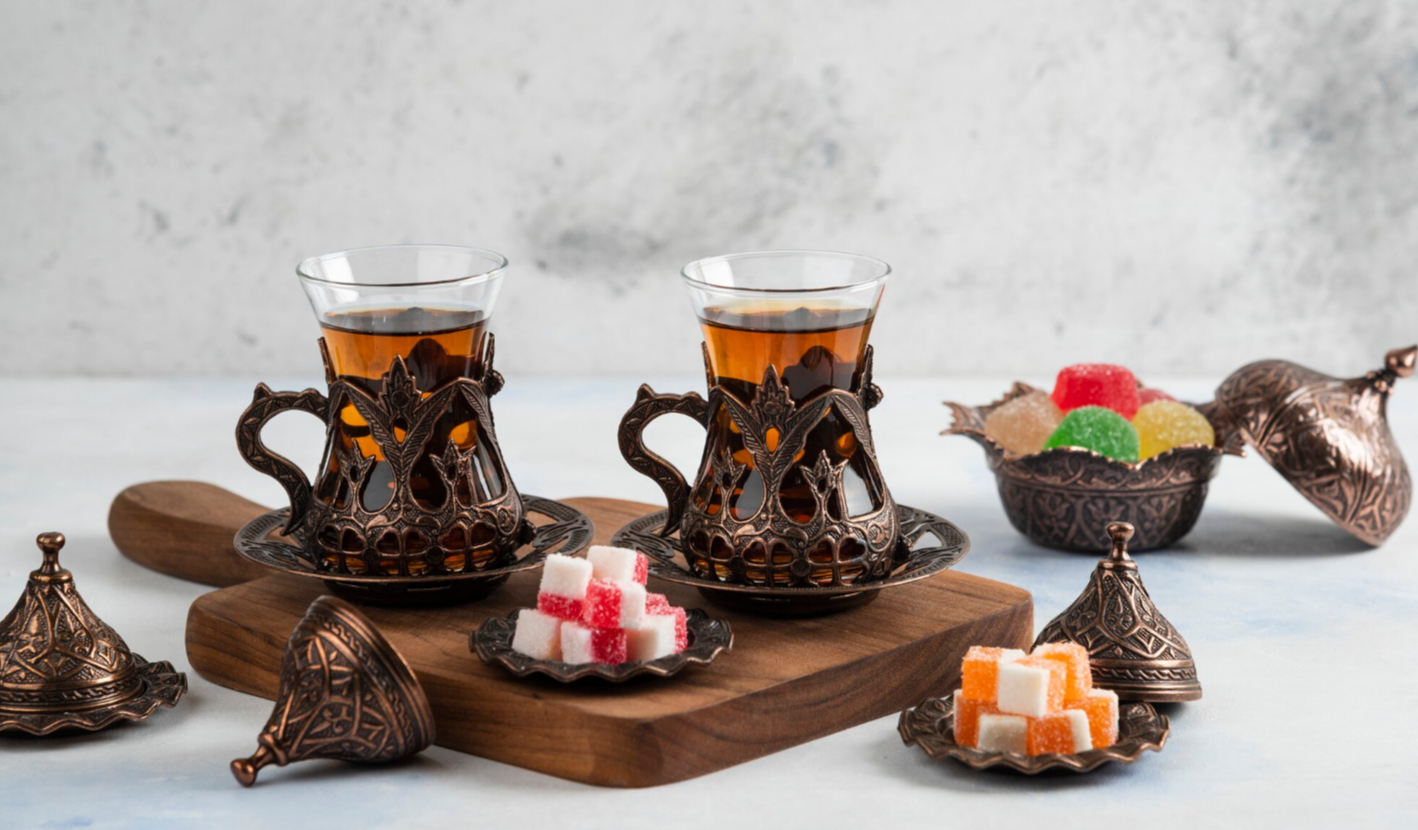
The glasses used for Turkish tea are just as important as the brewing method. Traditional çay is always served in a tulip-shaped glass with a small saucer and one or two sugar cubes on the side. The tulip shape is narrow at the waist and wider at the top and bottom, which allows the tea to cool slightly at the rim while staying warm in the body of the glass. The glass is small by Western standards, typically holding no more than about 100 to 120 milliliters, which is intentional. The small size means the tea is consumed while still hot and fresh, and then another glass is poured. This cycle of pouring and drinking and conversation is the rhythm of the tea ritual.
Sugar is always offered separately rather than being added during brewing. This is another way the tradition accommodates individual preference. Some people drink their tea with one sugar cube, some with two, and many drink it completely plain. Milk is almost never added to Turkish tea, which is a notable difference from British or Indian tea traditions. The flavor of the tea is meant to stand on its own, clear and strong, without anything to soften or modify it.
The quality of Turkish tea depends heavily on the freshness of the leaves, the temperature of the water, and the steeping time. Water that is too hot or steeping that goes on too long produces a bitter, harsh tea. Water that is not hot enough produces a flat, weak result. Getting it right requires attention and practice, which is part of why tea made by someone who grew up with the tradition often tastes noticeably better than tea made by someone following instructions for the first time.
The Social Role of Tea in Turkish Culture
To understand why çay matters so much in Turkey, you have to understand what it represents beyond the beverage itself. Tea in Turkish culture is a language. Offering someone tea is an act of welcome. Accepting tea is an act of trust. Refusing tea when it is offered can signal discomfort or a desire to end a visit, which is why most people accept at least one glass even if they are not particularly thirsty.
In Turkish homes, offering tea to a guest is one of the first things a host does after someone arrives. The preparation itself is part of the hospitality. The sound of the çaydanlık heating on the stove, the smell of the brewing tea moving through the room, and the act of bringing glasses to the table on a tray are all gestures of care that communicate welcome without words. The guest is being told that they are worth the time and attention required to make proper tea.
In workplaces across Turkey, tea is delivered to desks and offices by designated tea servers multiple times throughout the day. In bazaars and markets, shopkeepers offer tea to customers as an invitation to stay, browse, and talk. In barbershops, tea is served while you wait. At government offices, tea appears in waiting rooms. The beverage threads through every part of Turkish daily life because it is the mechanism through which Turkish people create and maintain social connection.
Tea houses, called çay evi or çay bahçesi, are institutions in their own right. They are spaces where people gather for hours at a time, playing backgammon or cards, reading newspapers, or simply sitting and talking. The cost of the tea is minimal because the real product being sold is time and space, the opportunity to be somewhere unhurried with other people. These spaces exist in cities and villages alike and are considered a fundamental part of the social infrastructure of Turkish life.
The ritual of tea also plays a role in important moments. Negotiations over business deals, marriage proposals, and reconciliations between families often take place over tea. The drink creates a neutral, comfortable atmosphere that makes difficult conversations easier to have. It gives people something to do with their hands and a reason to pause before speaking, which naturally slows the pace of interaction in a way that is often productive.
Turkish Tea and the Full Dining Experience
When you sit down at a Turkish restaurant and the meal moves through grilled kebabs, warm pita, hummus, and fresh salads, the arrival of tea at the end signals the same thing it signals in a Turkish home. The food is finished, but the gathering is not. The tea is an invitation to stay at the table a little longer, to talk about what you just ate, to share a small dessert like baklava, and to let the meal settle in a way that rushed eating never allows.
Turkish coffee often gets more attention in discussions of post-meal beverages at Turkish restaurants, and it deserves its reputation. But tea is equally valid as a way to close a meal and often feels lighter and more extended as an experience. Where Turkish coffee is intense and finished in a few sips, çay is refillable and encourages a slower pace. Both reflect the same cultural philosophy of treating the end of a meal as a continuation of the gathering rather than a signal that it is time to leave.
At a Turkish and Mediterranean restaurant like Hummus Mediterranean Restaurant in San Mateo, San Francisco, Palo Alto, and Mountain View, the presence of Turkish tea on the menu is a reflection of how seriously the restaurant takes the full cultural experience of the cuisine it serves. The food, the coffee, and the tea are all part of the same tradition, and experiencing them together is closer to what eating at a Turkish restaurant is actually supposed to feel like.
For Bay Area diners who love exploring authentic food cultures, Turkish tea is one of the details that separates a genuinely immersive experience from a meal that happens to serve kebabs. It is a small thing, a glass of tea, but in Turkish culture, small things are rarely just small things. They carry meaning, history, and an entire way of relating to other people that is worth paying attention to the next time the glass arrives at your table.
