
Regular Coffee vs. Turkish Coffee
Most people have a coffee routine. A drip machine in the morning, a latte from a café on the way to work, maybe an espresso after lunch. Coffee is familiar. But if you have ever sat down at a Turkish restaurant and been handed a small cup filled with something dark, thick, and intensely aromatic, you already know that Turkish coffee is a different experience entirely. It looks different, tastes different, feels different in your hands, and carries a cultural weight that a paper cup from a drive-through simply does not have.
This guide breaks down exactly what separates Turkish coffee from regular coffee, how each one is made, what they taste like side by side, and why Turkish coffee has remained a beloved part of Mediterranean and Middle Eastern food culture for centuries. Whether you are a serious coffee lover or someone who just had their first cup at a Turkish restaurant in San Francisco and wants to understand what they just drank, this is the guide for you.
How Each Coffee Is Made and Why It Matters
The difference between Turkish coffee and regular coffee starts long before the cup reaches the table. It begins with the grind.
Regular drip coffee, which is what most Americans drink at home, uses coffee grounds that are medium in size. Water flows through the grounds in a filter, picks up the flavor, and drips into a pot or cup below. The grounds stay in the filter and never touch the final drink. The result is a clean, smooth liquid that is easy to drink in large quantities. Espresso uses a finer grind and forces hot water through packed grounds under high pressure, producing a small, concentrated shot with a layer of foam on top called crema. Both methods separate the grounds from the liquid before you drink it.
Turkish coffee works completely differently. The coffee beans are ground to an extremely fine powder, much finer than espresso. This powder is combined with cold water and sugar directly in a small long-handled pot called a cezve or ibrik. The mixture is then heated slowly over low heat, often over a flame or in hot sand, until it just begins to foam and rise. It is removed from heat before it boils, sometimes allowed to foam a second time, and then poured directly into a small cup without filtering. The grounds settle to the bottom of the cup as the coffee cools slightly, and you drink the liquid from the top while leaving the sediment behind.
This unfiltered method is what gives Turkish coffee its texture and intensity. The coffee is thick, almost syrupy at times, and the flavor is concentrated in a way that drip coffee simply is not. You drink it slowly, in small sips, not because it is too hot but because the experience asks for that kind of attention.
Here is a quick comparison of the two:
Grind size: Turkish coffee uses an ultra-fine powder; drip coffee uses medium grounds
Brewing method: Turkish coffee is simmered unfiltered; drip coffee passes water through a filter
Cup size: Turkish coffee is served in very small cups; drip coffee in standard mugs
Grounds in the cup: Turkish coffee has sediment at the bottom; drip coffee has none
Sugar: Sugar is added during brewing in Turkish coffee, not after
The Taste Difference and What to Expect
If you have only ever drunk drip coffee or lattes, your first cup of Turkish coffee can be a surprise. The flavor is bold and roasted, with a richness that coats the mouth. Depending on how it is made, it can have a slight bitterness that lingers pleasantly, similar to dark chocolate. The texture is thicker than any filtered coffee, and the aroma is intense from the moment the cup is set in front of you.
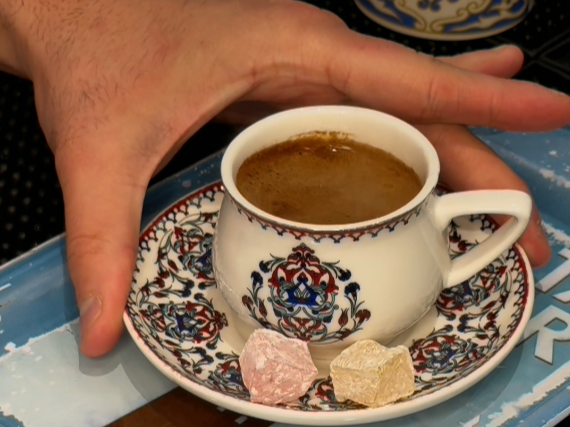
Turkish coffee is traditionally ordered in one of three sweetness levels. Sade means no sugar at all and produces the most intense, bitter version. Az sekerli means a small amount of sugar, which softens the bitterness slightly without making the coffee sweet. Orta is medium sweet and is the most common choice for first-time drinkers. Cok sekerli means very sweet and is popular with people who prefer their coffee on the dessert side.
The sugar is added to the cezve during brewing, not stirred in afterward. This matters because it changes the chemistry of the drink. The sugar caramelizes slightly during the slow heating process and blends into the coffee in a way that feels smoother and more integrated than sugar stirred into a finished cup.
Regular coffee, by comparison, is far more forgiving. It can be drunk hot or cold, with or without milk, flavored or plain, quickly or slowly. It fits into the rhythm of a busy morning or a rushed afternoon. Turkish coffee does not fit into that rhythm because it is not meant to. It is a ritual. It is something you sit with.
At a Turkish restaurant, being served Turkish coffee signals the end of a meal in the best possible way. After grilled kebabs, warm pita, hummus, and maybe a piece of baklava, a small cup of Turkish coffee is the perfect closing note. The bitterness cuts through the sweetness of the dessert, and the act of drinking it slowly encourages you to stay at the table a little longer, which is entirely the point.
Turkish Coffee in the Context of Food Culture
Coffee culture in Turkey goes back to the 16th century. The first coffeehouses in Istanbul opened around 1554 and quickly became important social spaces where people gathered to talk, play games, and share ideas. The coffeehouse tradition spread from Turkey throughout the Ottoman Empire and eventually into Europe, where it influenced café culture in cities like Vienna and Paris.
This history explains why Turkish coffee is never really just about the coffee. It is about the experience of sitting with someone and taking time together. When you are offered Turkish coffee at the end of a meal in Turkey or at an authentic Turkish restaurant in San Francisco, it is a gesture of hospitality. The food is finished, but the company is not, and the coffee gives everyone a reason to stay.
Bay Area eats have embraced this kind of dining culture more broadly, and Turkish and Mediterranean restaurants in San Francisco, San Mateo, Palo Alto, and Mountain View bring that same warmth to the table. A meal at a place like Hummus Mediterranean Restaurant is not just about eating quickly and leaving. The food, the coffee, and the atmosphere are all part of a larger experience that is meant to be enjoyed slowly.
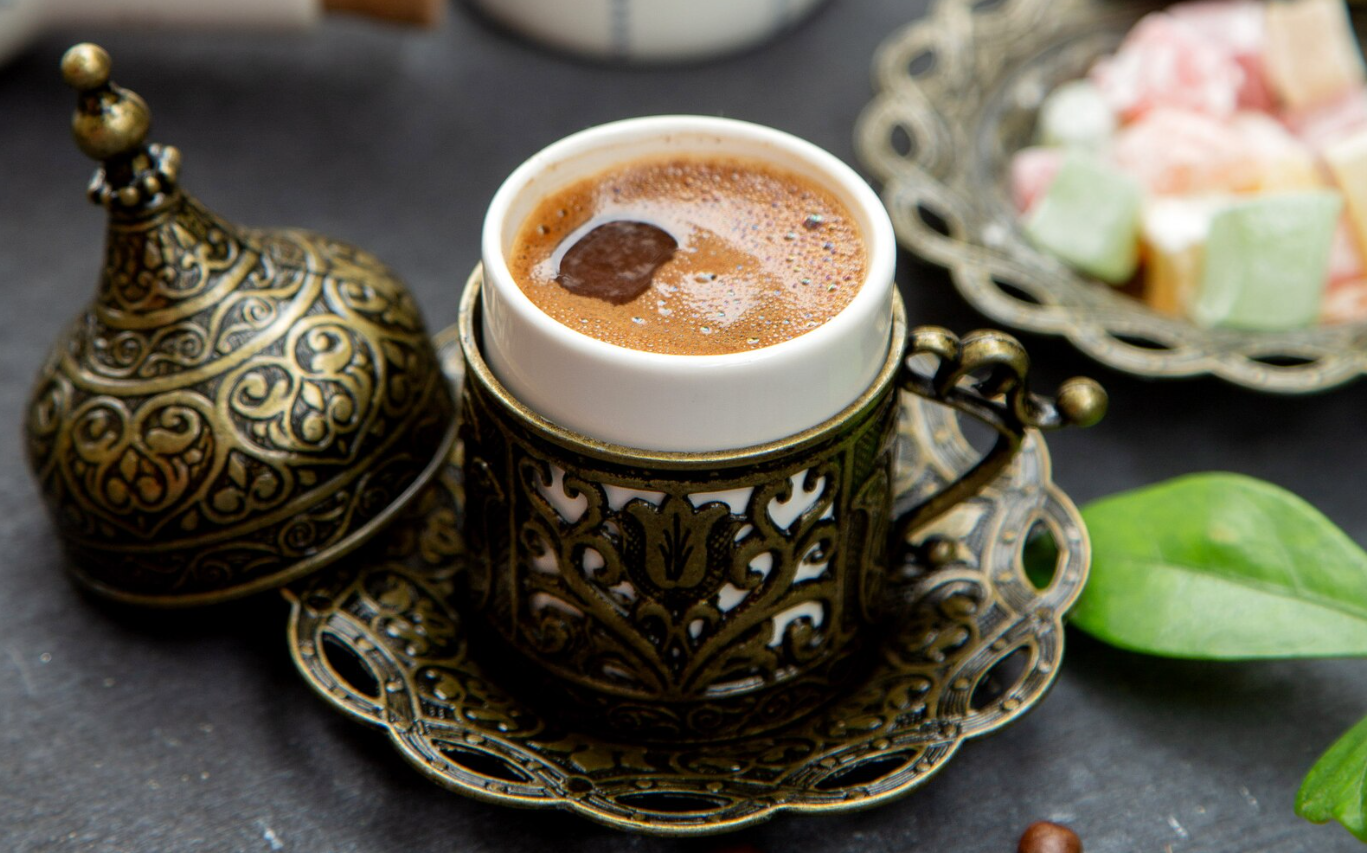
Turkish coffee also pairs exceptionally well with Turkish sweets. Baklava, with its layers of filo dough, crushed pistachios, and syrup, is intensely sweet in the best way. A small cup of unsweetened or lightly sweetened Turkish coffee next to two pieces of baklava is one of those combinations that makes complete sense the moment you try it. The bitterness and the sweetness play off each other in a way that makes both things taste better. Rice pudding, another common dessert at Turkish and Mediterranean restaurants, works similarly alongside a warm cup.
Where Turkish Coffee Fits
Understanding Turkish coffee makes the full Mediterranean dining experience feel more complete. It is not just a beverage. It is a signal that the kitchen takes the food culture seriously from the first bite to the last sip.
When you sit down at a Turkish or Mediterranean restaurant in San Francisco and work through a meal of shared starters, grilled kebabs, fresh salads, and warm pita, the arrival of Turkish coffee at the end tells you that the restaurant understands what the meal is supposed to feel like. Hummus Mediterranean Restaurant in San Mateo, San Francisco, Palo Alto, and Mountain View serves Turkish coffee as part of a broader commitment to bringing the full Turkish and Mediterranean dining experience to the Bay Area.
For anyone exploring authentic Turkish food in San Francisco or looking for a Mediterranean restaurant that goes beyond just the food, the presence of real Turkish coffee on the menu is a good sign. It means the kitchen cares about the details, and in food, the details are everything. Whether you end up preferring a strong sade with no sugar or a sweet cok sekerli with dessert, the experience of drinking Turkish coffee at the end of a good meal is one worth having at least once, and usually many times after that.
