What Is Turkish Delight?
Most people have heard the name Turkish delight at some point, whether through a children's book, a film, or a curious bite at a specialty food shop. But very few people outside of Turkey and the broader Mediterranean world actually know what it is, where it comes from, and why it has stayed popular for hundreds of years. If you have ever wondered what makes this confection so special, this guide answers all of it in plain terms.
Turkish delight is also a great entry point into understanding Turkish food culture more broadly. And for anyone exploring authentic Turkish food in San Francisco or the Bay Area, knowing the sweet side of this cuisine helps complete the picture of just how rich and layered it really is.
What Turkish Delight Actually Is
Turkish delight is a soft, chewy confection made from a base of starch and sugar. In Turkish, it is called lokum, which comes from an Arabic phrase meaning throat comfort. The texture is unlike most Western candies. It is not hard, not gummy in the way modern candy is, and not sticky in an unpleasant way. The best version has a gentle chew, a slight bounce, and dissolves slowly on the tongue while releasing its flavor.
The basic recipe has been around since the late 18th century and is believed to have been created in Istanbul during the Ottoman Empire. A Turkish confectioner named Hacı Bekir is widely credited with refining and popularizing the recipe, and his shop in Istanbul still exists today. The sweet quickly became popular across the Ottoman world and eventually made its way to Europe in the 19th century, where it was sold as a luxury item.
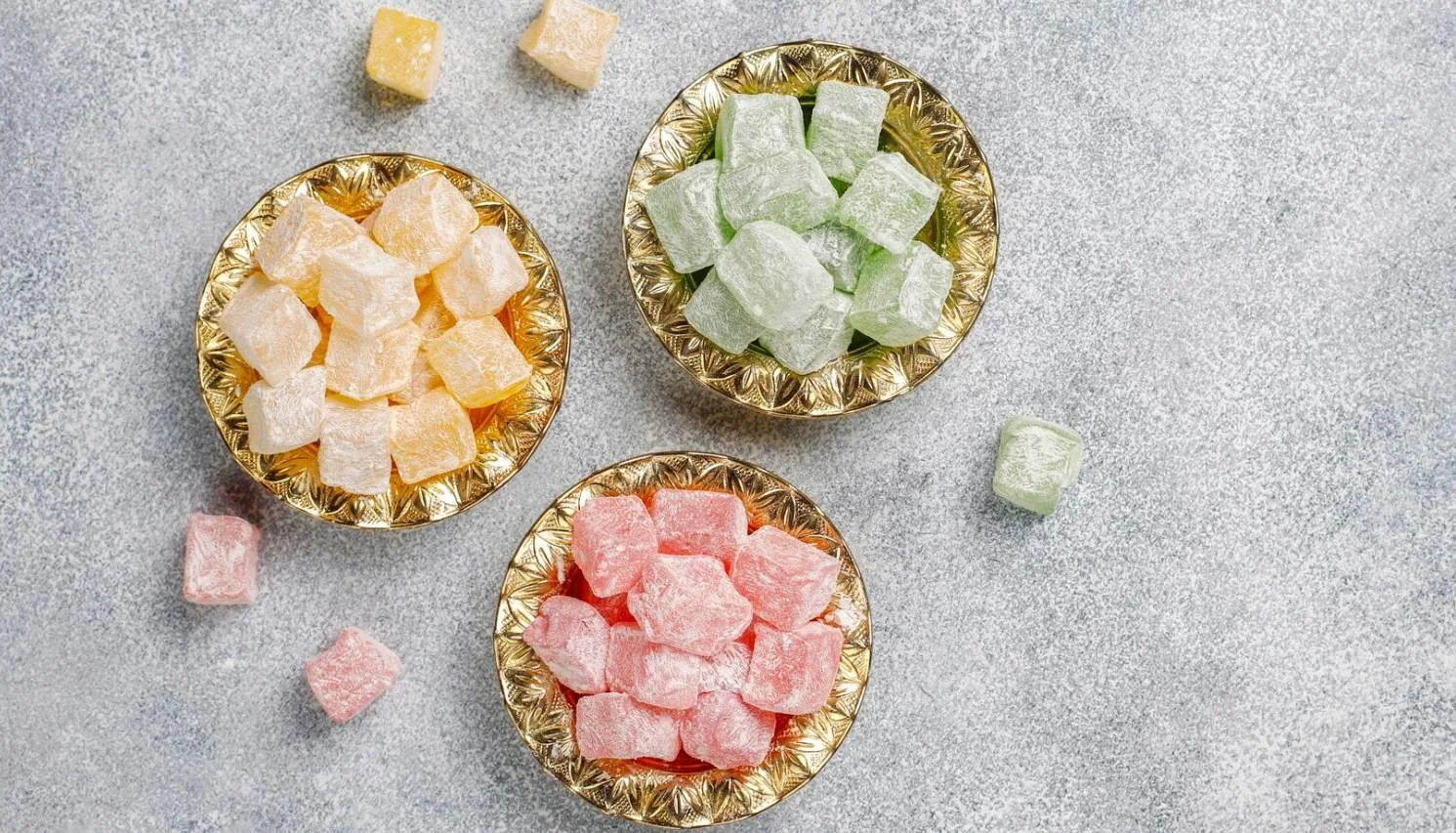
Traditional lokum is made by cooking a mixture of sugar, water, and starch together until it reaches a thick, gel-like consistency. Flavorings and mix-ins are added before the mixture is poured into trays to set. Once firm, it is cut into small cubes and dusted with powdered sugar or shredded coconut to keep the pieces from sticking together.
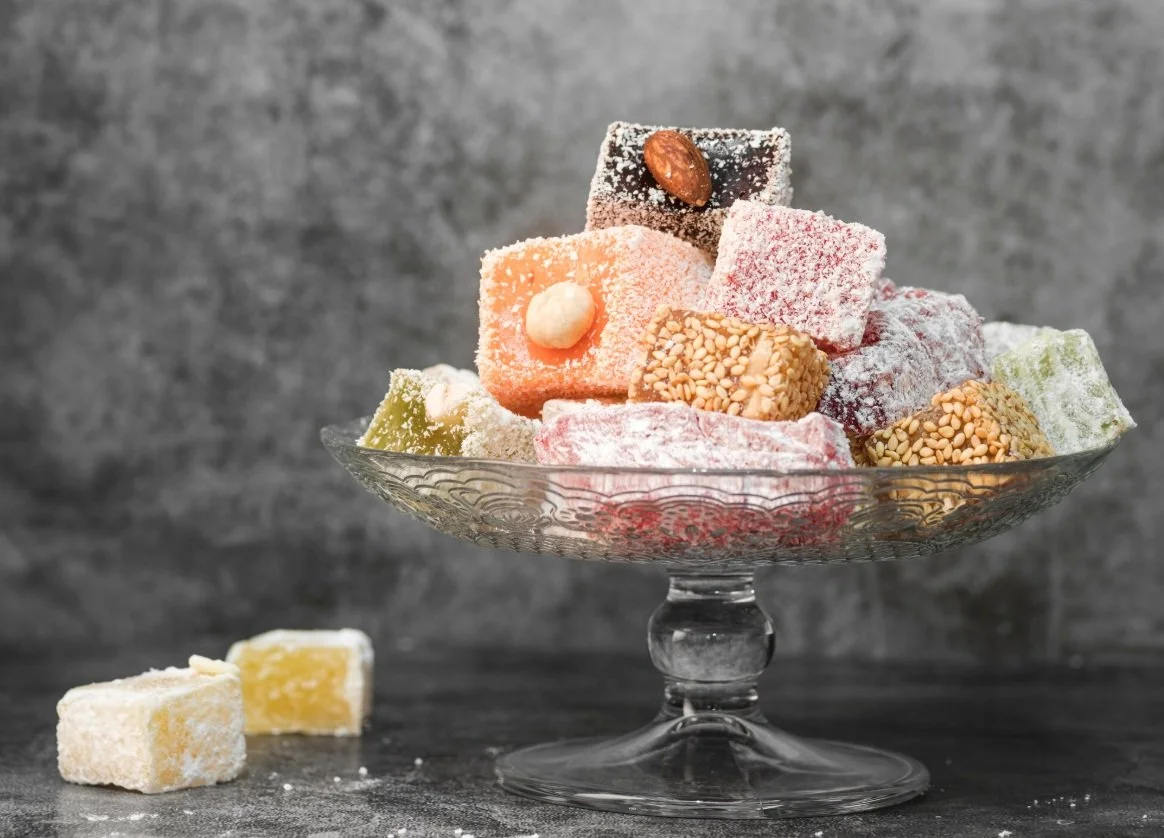
The most classic flavor is rose water, which gives the candy a floral, lightly perfumed taste that is subtle rather than overwhelming. Other traditional flavors include lemon, orange, mint, and mastic, which is a resin with a pine-like, slightly savory flavor unique to the Mediterranean. More indulgent versions include whole pistachios, hazelnuts, or walnuts pressed into the center, which add richness and a satisfying crunch against the soft exterior.
Why Turkish Delight Matters in Food Culture
Understanding lokum helps explain something important about Turkish food culture as a whole. Sweets have always held a high place in Turkish society. Hospitality is central to Turkish tradition, and offering guests something sweet, whether lokum, baklava, or a small cup of strong coffee, is a gesture of welcome that goes back centuries.
This connection between food and hospitality shows up in how Turkish and Mediterranean restaurants approach the dining experience. A meal is never just fuel. It is a social event built around sharing, conversation, and enjoyment. Starting a meal with shared appetizers, moving through grilled meats and fresh salads, and finishing with something sweet like baklava or rice pudding reflects the same philosophy that made lokum a staple of Turkish culture in the first place.
Bay Area eats have come to embrace this approach, and Turkish restaurants in San Francisco, San Mateo, Palo Alto, and Mountain View bring this full dining experience to the table. For Bay Area foodies curious about the sweet side of Mediterranean and Turkish cuisine, lokum is a good place to start because it is so distinctly Turkish while also being approachable for anyone who likes sweets.
Turkish delight also connects closely to baklava, which is the other most famous Turkish sweet. Baklava is made from thin layers of filo dough filled with crushed pistachios or walnuts and soaked in a syrup made from sugar, water, and sometimes lemon or orange blossom water. It is rich, flaky, and intensely sweet in small amounts. The two confections represent very different textures but the same commitment to quality ingredients and careful preparation that defines Turkish pastry work. Baklava appears on many Mediterranean restaurant menus, including at Turkish and Greek Mediterranean restaurants throughout the Bay Area.
How Turkish Sweets Fit Into a Full Mediterranean Meal
When someone sits down at a Turkish restaurant for the first time, the dessert course can feel like a complete surprise after all the savory dishes that come before it. A meal might begin with hummus, warm pita, tzatziki, dolmades, and baba ghanoush passed around the table. Then come the grilled kebabs, gyro plates, or a döner wrap with fresh vegetables and yogurt sauce. After all of that bold, savory, herb-forward food, something sweet and small feels exactly right.
Baklava is the most common dessert choice at a Turkish or Mediterranean restaurant and is perfectly sized for the end of a meal. Two small pieces are usually all you need. The sweetness is concentrated and satisfying, and it pairs especially well with Turkish coffee or mint tea, both of which cut through the richness and round out the experience.
Rice pudding is another dessert that shows up on many Turkish restaurant menus. It is made from short-grain rice, milk, sugar, and a touch of vanilla or rose water, and it is served cold. It is gentler and creamier than baklava and works well for people who want something sweet without anything too intense.
Turkish Food Beyond the Sweets: What to Expect When You Dine Out
For anyone who has developed an interest in Turkish delight and now wants to explore the full range of Turkish cuisine, the experience at a good restaurant goes far beyond dessert. Turkish food is one of the most well-rounded cuisines in the world, covering everything from light salads and dips to hearty grilled meats and slow-cooked dishes.
Grilled kebabs are the dish most people associate with Turkish restaurants, and for good reason. Whether it is a herb-marinated chicken kebab, a lamb shish kebab, or butcher's cut koftedes made from seasoned ground lamb and beef, the grill work at a Turkish restaurant defines the meal. Where to get kebabs in San Francisco is a common search, and the best spots are the ones that use quality halal meat, real spice blends, and a proper grill rather than shortcuts.
Gyro sandwiches and döner kebabs are closely related and represent some of the most satisfying handheld meals available at any Mediterranean restaurant. Slow-cooked, thinly sliced meat served in warm lavash bread with fresh greens, tomato, and house sauce is a combination that works for lunch, dinner, or anytime in between. A lamb gyro in San Francisco from a restaurant that does it properly has a depth of flavor that is hard to find elsewhere.
For anyone interested in healthy dining options in San Francisco, the broader Turkish and Mediterranean menu is full of choices that are grilled, fresh, and made without heavy sauces. Grilled salmon with olive oil and herbs, Fattoush salad, and chicken kebab plates are all examples of food that is genuinely nutritious without tasting like something you are eating out of obligation.
Halal Mediterranean food has become increasingly important to diners across the Bay Area, and finding a halal restaurant that also delivers on flavor and quality is something people actively search for. Hummus Mediterranean Restaurant in San Mateo, San Francisco, Palo Alto, and Mountain View offers exactly that, bringing together Turkish, Greek, and broader Mediterranean flavors in a setting that works for families, couples, solo diners, and group gatherings.
Mediterranean food delivery in San Francisco and Mediterranean takeout across the Bay Area make it easy to enjoy all of this food without leaving home. Kebab plates, hummus with warm pita, gyro wraps, and baklava for dessert all travel well and hold their quality during transit. For busy weeknights when cooking feels like too much, this is the kind of food that fills the gap without compromise.
Turkish cuisine, from a soft cube of rose-water lokum to a perfectly grilled shish kebab, tells a story about a food culture that values real ingredients, careful preparation, and the pleasure of eating well with people you enjoy. Whether the sweet or the savory side of this cuisine draws you in first, the rest will follow naturally once you sit down and try it.
