Traditional Turkish Lahmacun: The Thin, Crisp Flatbread
Walk into a lahmacun shop in Turkey at lunchtime and you will see a wall of fire and a baker who never stops moving. Round dough circles go in on a long wooden paddle, and a minute or two later they come out blistered, fragrant, and ready to eat. Plates of fresh parsley, sliced onion, and lemon wedges land on the table, and people roll up their lahmacun like a wrap and eat it with their hands. It is quick, cheap, and deeply loved. Turkish people often order several at a time, and no one finds that strange.
Lahmacun is one of the most popular foods in Turkish cuisine, yet many people outside Turkey have never heard of it. Some call it Turkish pizza, but that nickname hides what makes it special. This guide explains what lahmacun is, how it is made, where it comes from, and how to eat it the right way, so you know exactly what to expect the next time you see it on a menu.
What Lahmacun Is and Where It Comes From
The word lahmacun comes from the Arabic phrase lahm bi ajin, which means meat with dough. That name describes the dish perfectly. A very thin round of dough is spread with a paste of finely minced meat, vegetables, and spices, then baked at high heat until the edges turn crisp and the center stays tender. There is no cheese and no tomato sauce. The topping is the sauce, the meat, and the seasoning all in one thin layer.
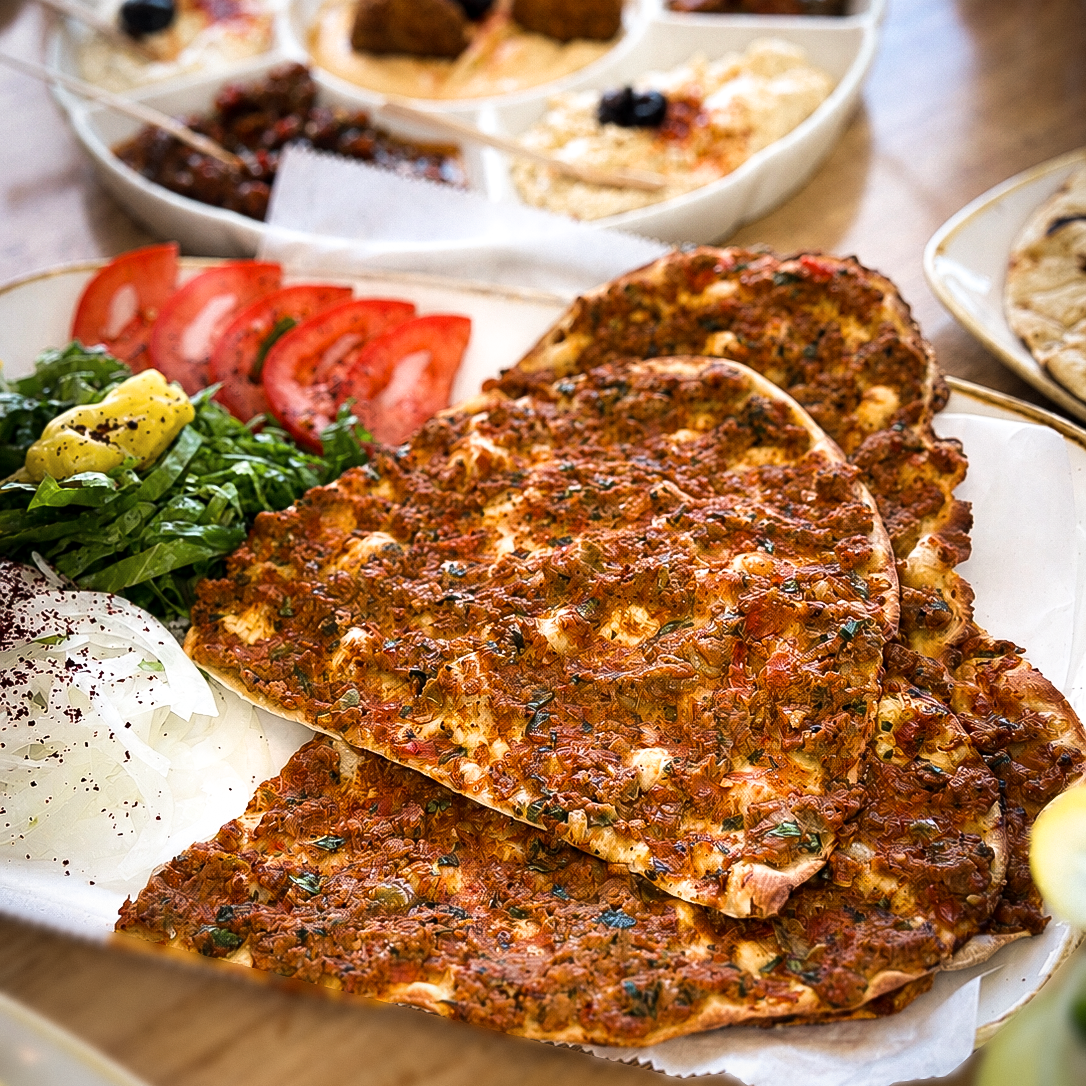
The dish belongs to the southeastern part of Turkey, especially the cities of Gaziantep, Şanlıurfa, and Mardin. These cities sit near the Syrian border and share a food culture with the Levant, where similar flatbreads such as sfiha and lahm bi ajin are also popular. Gaziantep, in particular, is famous across Turkey for its bakers, and many people consider its lahmacun the standard to measure others against. Over time, the dish moved west with workers and families and became a street food favorite in Istanbul, Ankara, and Izmir.
Because the region has such a long baking tradition, lahmacun is made in a very particular way. Wood-fired stone ovens give the flatbread its blistered edges and smoky smell. The dough is rolled so thin that it bakes in minutes, which is why a lahmacun shop can serve a full table within a short time. It is also why the dish works so well as a lunch food for busy workers.
How Lahmacun Is Made and What Gives It Flavor
The dough is simple. Flour, water, yeast, salt, and a little oil are mixed, rested, and divided into small balls. Each ball is rolled into a thin circle, often as wide as a dinner plate but thinner than a tortilla. Thin dough matters. If it is too thick, the lahmacun turns bready and soft. If it is rolled correctly, the edges crisp up while the middle stays pliable enough to roll.
The topping is where the flavor lives. Traditional lahmacun uses finely minced lamb or a mix of lamb and beef. The meat is mixed by hand with tomato, red bell pepper, onion, garlic, and a large amount of fresh parsley. Spices such as red pepper flakes, paprika, cumin, and black pepper bring warmth. Many cooks add a little pomegranate molasses or tomato paste for tang and color. Regional versions differ. Urfa style leans on the smoky, raisin-like Urfa pepper, while Gaziantep style often uses Aleppo pepper and is bright and slightly sharp. Every family and every bakery has its own ratio.
The mixture is spread very thin across the dough, all the way to the edge. This detail is important. A thick layer of meat would stay raw in the short baking time and would make the dough soggy. A thin layer cooks through instantly, and the juices soak just enough into the dough to flavor it without making it wet. The lahmacun then goes into a very hot oven for only a couple of minutes. When it comes out, the edges are crisp, the meat is cooked, and the whole flatbread smells like grilled lamb and charred pepper.
How to Eat Lahmacun the Right Way
Eating lahmacun is half the fun, and there is a simple routine most Turkish diners follow. First, squeeze fresh lemon juice over the top. The lemon brightens the rich meat and lifts the spices. Next, add a handful of fresh parsley, sliced raw onion, and sometimes a few slices of tomato or a sprinkle of sumac. Then roll the lahmacun into a tight tube and eat it by hand. Some people tuck pickled red cabbage or hot pepper inside. Others pair it with a glass of ayran, which is a cold, salty yogurt drink that balances the spice and cools the mouth.
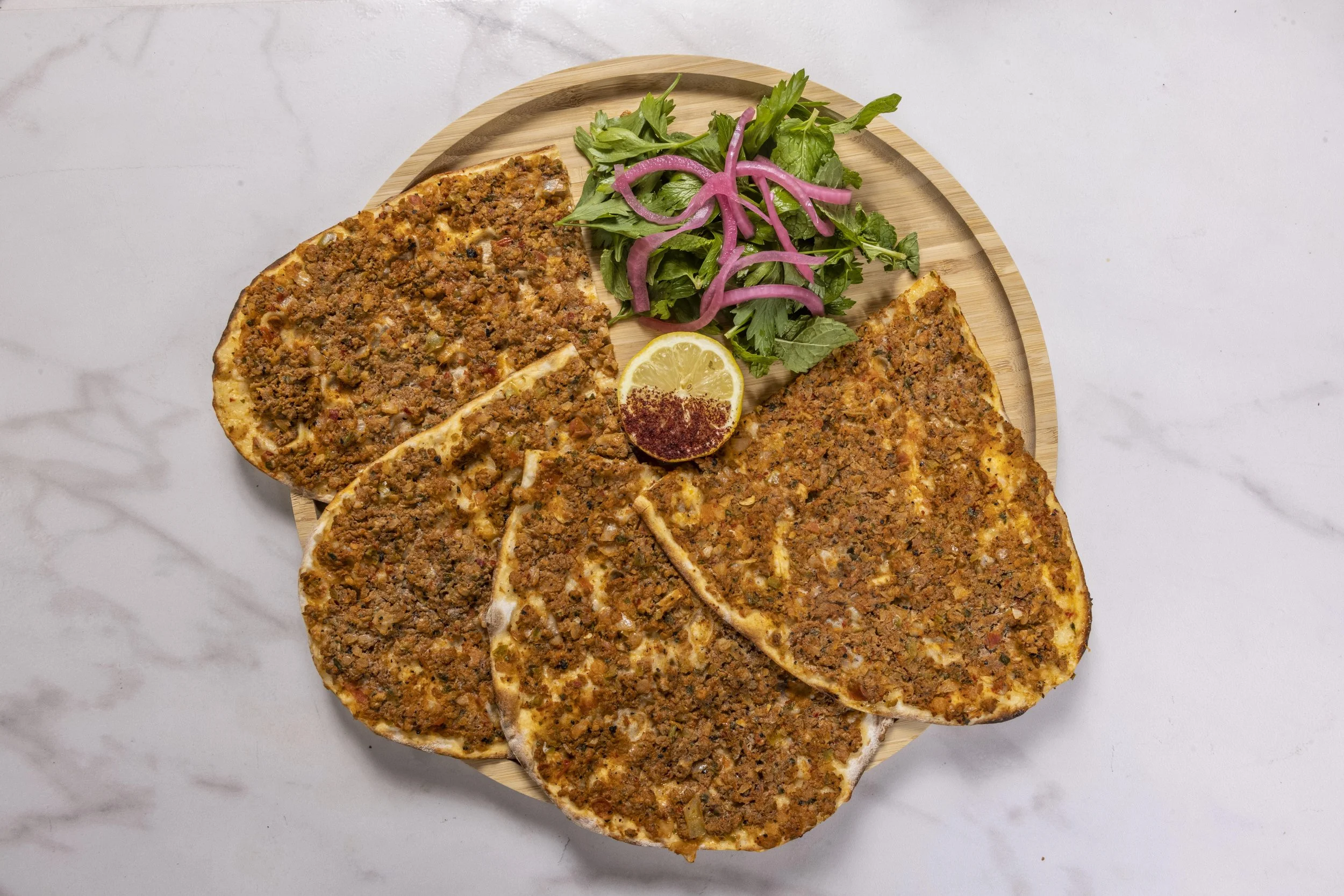
A good lahmacun should bend without cracking. If it shatters into pieces, it was overbaked. If it droops like a wet towel, it was underbaked or the topping was too thick. The best ones fold neatly, with a slight crunch at the edge and a juicy, flavorful center. It is not a heavy dish, which is why many people can eat two or three in one sitting.
Lahmacun is not the same as pide, even though the two often sit next to each other on menus. Pide is a boat-shaped bread with a soft, chewy dough and a thick filling baked inside the folded edges. Lahmacun is flat, thin, and crisp, with a topping that bakes into the surface. Pide is eaten in slices with a fork or hands, while lahmacun is rolled. It also differs from Italian pizza, which uses a thicker dough, tomato sauce, and melted cheese. Lahmacun gets its richness from the meat, not from dairy.
Vegetarian versions exist too. Some bakeries make a version with a base of crushed tomato, pepper, onion, and herbs, with no meat at all. A cheese lahmacun, topped with crumbled white cheese or kaşar, is a good option for people who skip meat but still want the crispy flatbread experience.
Where Lahmacun Fits in the Bay Area Food Scene
Lahmacun is part of a bigger story. Turkish cuisine, Greek food, and Middle Eastern cooking all share dishes and habits, and the Bay Area has become a great place to taste them side by side. People searching for authentic Turkish food in San Francisco often start with kebabs, gyro, and döner, then discover the baked breads that sit alongside them. If you love a good lamb gyro in San Francisco or look for the best places for gyro and döner in SF, lahmacun is a natural next step, because it uses many of the same flavors in a lighter form.
Lahmacun also fits the way many locals like to eat. It is a perfect example of Mediterranean street food, easy to hold, full of fresh herbs, and ready in minutes. It works as a snack before dinner, a light lunch, or part of a shared table with hummus, baba ghanoush, tzatziki, and warm pita. A few lahmacun, a plate of grilled kebabs, and a fresh salad make a full spread for friends. Anyone looking for satisfying Mediterranean lunch ideas in San Francisco or healthy Mediterranean food in San Francisco will find it a smart choice, since the topping is mostly meat, vegetables, and herbs spread thinly over a light base.
At Hummus Mediterranean Restaurant in San Mateo, San Francisco, Palo Alto, and Mountain View, diners can explore Turkish and Mediterranean dishes in a relaxed setting built around grilled meats, dips, and warm bread. The Turkish side of the menu includes beef soujouk pide, Turkish breakfast dishes on weekends, and a wide range of kebab plates, so lahmacun fans will feel right at home with the flavors. It is a halal Mediterranean restaurant, which matters to many Bay Area diners, and the menu also covers Greek classics and Middle Eastern favorites for groups who want variety. Families, couples, and friends all find something to enjoy, and that is a big reason many people list it among the best Mediterranean restaurants in San Francisco and the surrounding cities.
If you are planning a visit, a few simple tips help. Share a few dips and a platter first, then order a main to pass around the table. Ask your server what pairs well with the dish you choose, and do not skip the lemon and fresh herbs. Pair your meal with Turkish tea or ayran, and finish with baklava or rice pudding if you have room. For a casual dinner, many guests choose a gyro wrap or a kebab plate with rice, which is a classic way to dine local in San Francisco without much effort.
Takeout is easy too. Flatbreads and kebabs travel well, so Mediterranean takeout near me is a common search on busy weeknights. When you order, ask for sauces and salads on the side so the crisp parts stay crisp. Eat grilled items soon after pickup to keep them juicy, and add extra pita, since it disappears fast. Many people also look at San Francisco takeout options for the office or choose Mediterranean food delivery in SF for a night in. Kebab takeout in SF and large catering trays are handy for gatherings, and they make it simple to feed a group with rice, salads, dips, and grilled meat.
Final Thoughts on Turkish Lahmacun
Lahmacun may look humble, but it carries centuries of baking skill in a single thin round. The dough is stretched until it is almost see-through, the topping is seasoned with care, and the finish comes from fire, lemon, and fresh herbs. It is fast food in the best sense, honest and flavorful and meant to be shared.
For Bay Area foodies who enjoy exploring new tastes, lahmacun is a worthy addition to your list of culinary delights in San Francisco. Try it with a squeeze of lemon, roll it up, and take a bite. Then order another, just as they do in Turkey.
