Traditional Mediterranean Desserts: A Guide to the Sweets That Have Lasted Centuries
There is a particular kind of satisfaction that comes at the end of a Mediterranean meal. The grilled meats are finished, the hummus bowl has been cleaned with the last piece of warm pita, the salads are gone, and then something small and sweet arrives at the table. It is never overwhelming. It is never the kind of dessert that requires a separate stomach. Mediterranean and Turkish sweets are precise in their sweetness, intentional in their richness, and almost always connected to a history that goes back hundreds or even thousands of years. They are not afterthoughts. They are the final word in a meal that has been carefully constructed from beginning to end.
Mediterranean desserts span an enormous range of countries, traditions, and techniques. Turkish, Greek, Lebanese, Moroccan, Egyptian, and other regional sweets all fall under the broad Mediterranean umbrella, and while they share some ingredients and approaches, each tradition has its own identity. What unites them is a philosophy about sweetness that differs from Western dessert culture. The goal is not excess. It is precision. A small piece of something intensely flavored, eaten slowly at the end of a meal, is the Mediterranean idea of a perfect dessert. Understanding these sweets means understanding something real about the food cultures that created them.
Baklava: The Most Recognized Mediterranean Sweet in the World
If there is one Mediterranean dessert that almost everyone has heard of, it is baklava. It is also one of the most misunderstood, because the versions most people have tried outside of a proper Turkish or Greek restaurant are often a pale imitation of what baklava is actually supposed to be. Store-bought baklava is usually too sweet, too soggy, and made with ingredients that prioritize shelf life over flavor. Fresh baklava from a kitchen that takes it seriously is a completely different experience.
Baklava is made from paper-thin sheets of filo dough layered with crushed nuts and baked until golden, then soaked in a syrup made from sugar, water, and lemon juice or sometimes honey. The most traditional Turkish version uses pistachios, which give the filling a rich, slightly savory, bright green character that contrasts beautifully with the sweetness of the syrup. Greek baklava more commonly uses walnuts, which are earthier and more intensely flavored than pistachios, and the syrup sometimes incorporates honey and cinnamon for a warmer, spicier profile. Lebanese baklava uses both pistachios and cashews in some variations and is often made with orange blossom water in the syrup, which adds a floral note that changes the character of the dessert entirely.
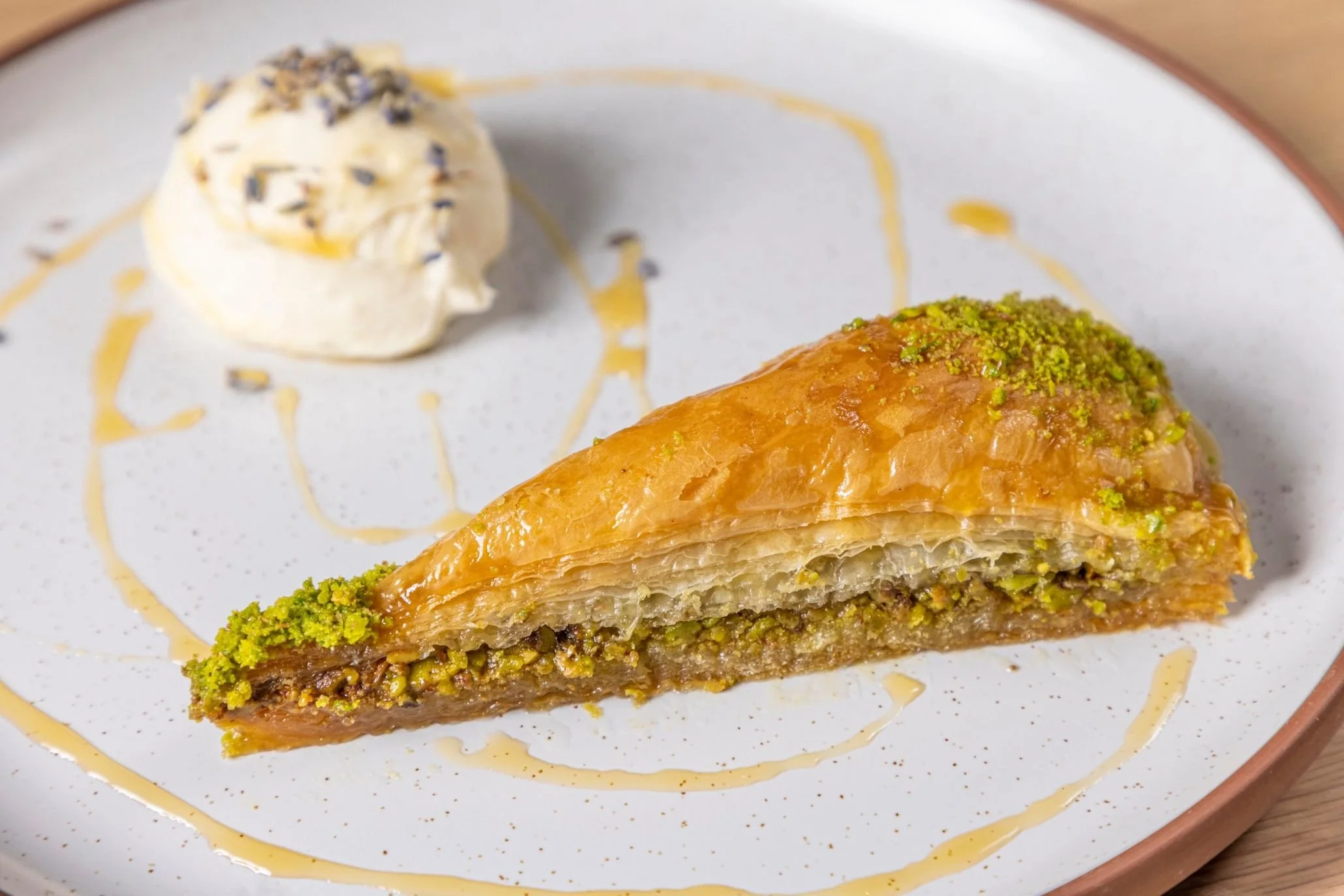
The filo dough is the technical challenge of baklava. Each sheet must be thin enough to see through, and a proper baklava uses many layers, sometimes thirty or forty, separated by brushings of clarified butter. The butter prevents the layers from sticking together and contributes to the shattering, flaky texture that defines well-made baklava. When you bite into a piece of baklava that has been made correctly, the top layers shatter into golden flakes, the nut filling provides a soft, dense contrast, and the syrup that has soaked into the layers without making them soggy ties everything together in one sustained burst of sweetness and richness.
The syrup application is one of the most important steps and one of the most commonly mishandled. The rule that most pastry cooks follow is that the baklava and the syrup should be at opposite temperatures when they meet. Hot baklava gets cold syrup poured over it, or room temperature baklava gets hot syrup. The temperature difference is what allows the syrup to penetrate the layers evenly without making them collapse or turn mushy. When this step is handled correctly, the baklava absorbs just enough syrup to be moist and flavorful throughout without becoming wet or heavy. When it is handled incorrectly, the result is the soggy, oversweetened version that gives baklava an unfair reputation.
At Hummus Mediterranean Restaurant in San Mateo, San Francisco, Palo Alto, and Mountain View, baklava is served in the two-piece portion that is traditional in Turkish and Mediterranean restaurant service, alongside Turkish coffee, which is the classic pairing. The bitterness of the coffee cuts through the sweetness of the pastry in a way that makes both things taste better, and the ritual of finishing a meal this way connects the dining experience to something genuinely traditional.
Rice Pudding, Semolina Cake, and the Creamy Side of Mediterranean Sweets
Not all Mediterranean desserts are pastry-based. A significant and deeply loved category of sweets across Turkey, Greece, and the broader Middle East is built on dairy, grains, and gentle cooking methods that produce creamy, soft textures rather than the crunch of filo and nuts. These desserts are often lighter in feeling than baklava, less intensely sweet, and more about comfort than complexity.
Rice pudding, known as sütlaç in Turkish and rizogalo in Greek, is one of the oldest and most widely loved desserts in the Mediterranean world. The Turkish version is made from short-grain rice cooked slowly in whole milk with sugar and a touch of vanilla or mastic, then set in individual clay dishes and often finished under a broiler or in a traditional wood-fired oven to create a slightly caramelized top surface with golden-brown patches. The interior is smooth and creamy, cool when served, with a gentle sweetness that feels completely appropriate after a full savory meal. It is the kind of dessert that does not demand attention but rewards it fully once you start eating it.
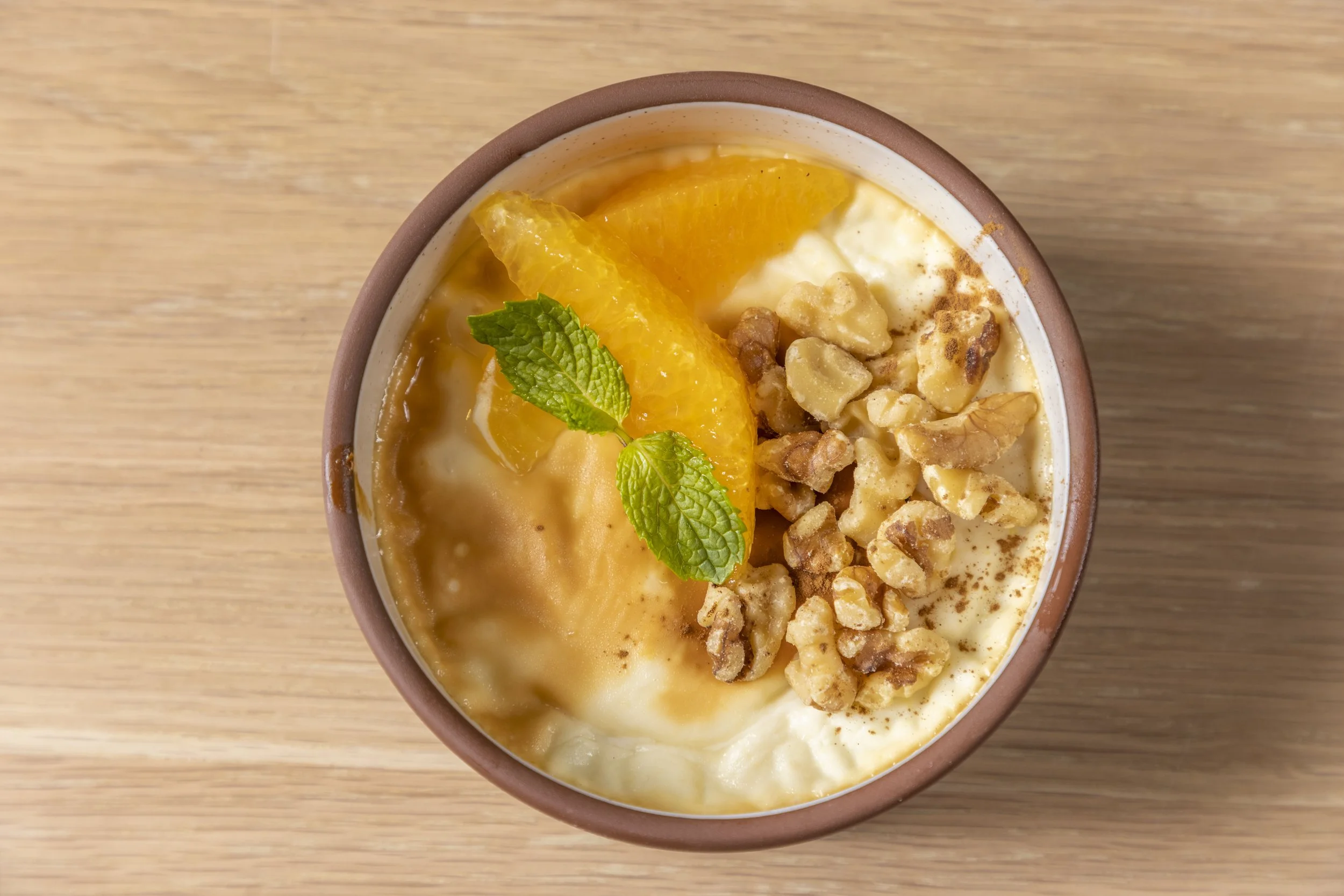
The mastic variation of rice pudding uses mastic resin, a natural product harvested from mastic trees on the Greek island of Chios, as its flavoring agent. Mastic has a unique, slightly piney, resinous flavor that is genuinely unlike anything else in the dessert world. It is subtle in small amounts and intensely aromatic in larger ones, and in rice pudding it adds a complexity that plain vanilla cannot achieve. Mastic appears in a wide range of Greek and Turkish sweets, ice creams, and beverages, and it is one of the ingredients that most clearly marks a dessert as coming from this specific part of the Mediterranean world.
Semolina cake, known as revani in Turkish and ravani in Greek, is another widely loved Mediterranean sweet that most people outside the region have not encountered. It is made from semolina, eggs, yogurt, and sugar baked together into a moist, dense cake that is then soaked in a light sugar syrup flavored with lemon or orange. The texture is quite different from flour-based cakes. It is denser and slightly grainy in the most pleasant way, with a moistness from the syrup soaking that keeps it from ever feeling dry. Flavored with citrus and sometimes coconut, revani is a simple dessert that works well in small portions and is genuinely difficult to stop eating once you have started.
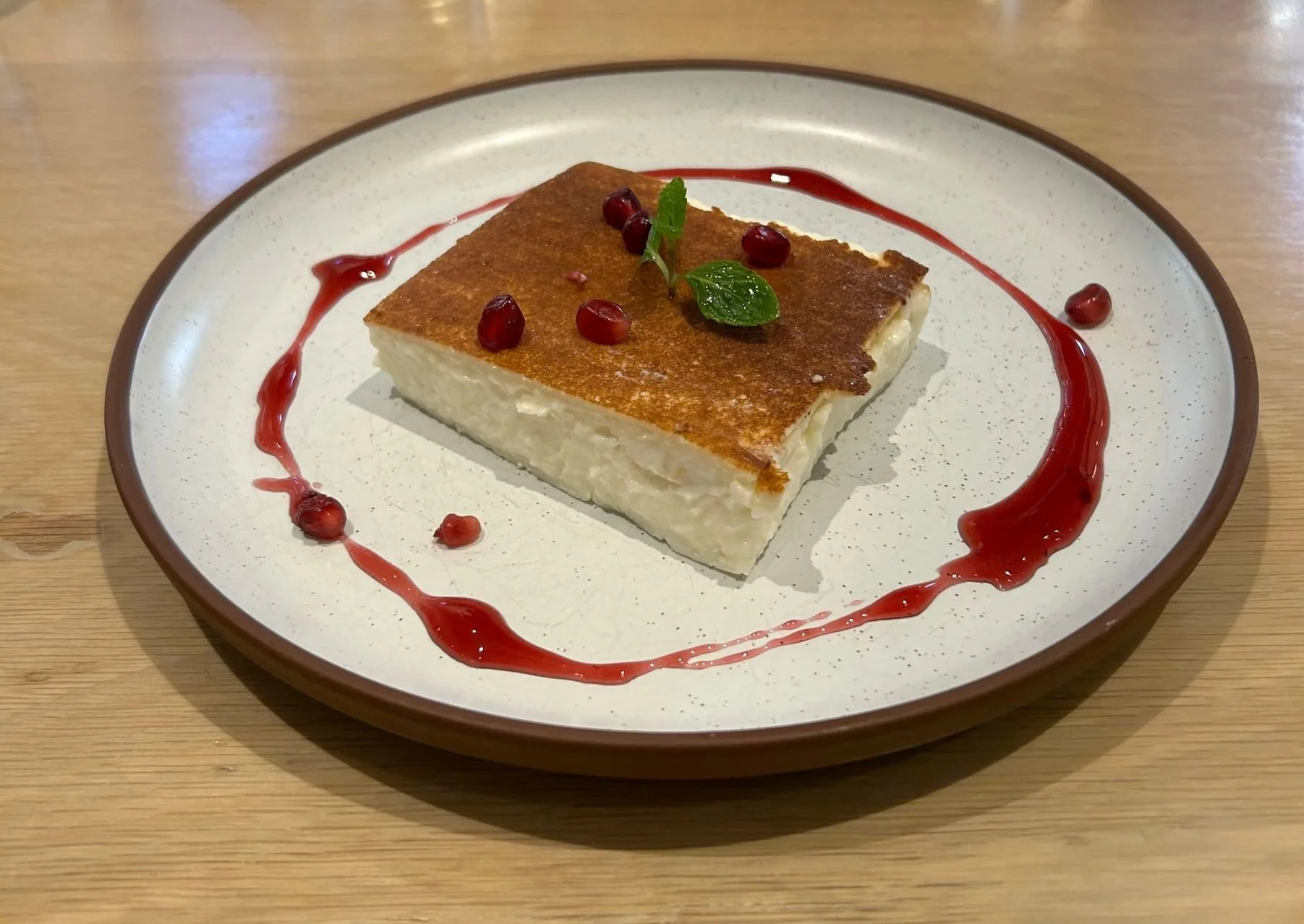
Kazandibi is a Turkish milk pudding dessert that has a caramelized bottom achieved by cooking the milk and sugar mixture in a copper pan until the base turns a deep golden brown, then chilling the pudding and inverting it so that the caramelized surface becomes the top when served. The result is a silky, cool pudding with a slightly bitter, smoky caramel crust that is one of the more sophisticated dessert experiences in Turkish cuisine. The contrast between the smooth, lightly sweetened pudding and the dark, almost savory caramel on top is striking, and it is the kind of dessert that makes people ask what they are eating because nothing else quite resembles it.
Lokum, Künefe, and the Desserts That Tell the Most Interesting Stories
Beyond the well-known baklava and rice pudding, there is a deeper layer of Mediterranean and Turkish sweets that tells more specific regional stories and uses techniques and ingredients that are genuinely distinctive.
Lokum, known in English as Turkish delight, is a confection made from starch and sugar cooked to a gel and flavored with rose water, lemon, mint, mastic, or other aromatics, then cut into cubes and dusted with powdered sugar or shredded coconut. It has been made in Turkey since the late 18th century and spread through the Ottoman Empire and into Europe as a luxury sweet. The texture is soft and yielding, with a gentle chew that releases flavor slowly rather than all at once. The rose water version is the most classic and the most associated with Turkish confectionery, though the pistachio-filled version, where whole pistachios are pressed into the center of each cube, is arguably the most satisfying because of the contrast between the soft exterior and the firm, rich nut inside.
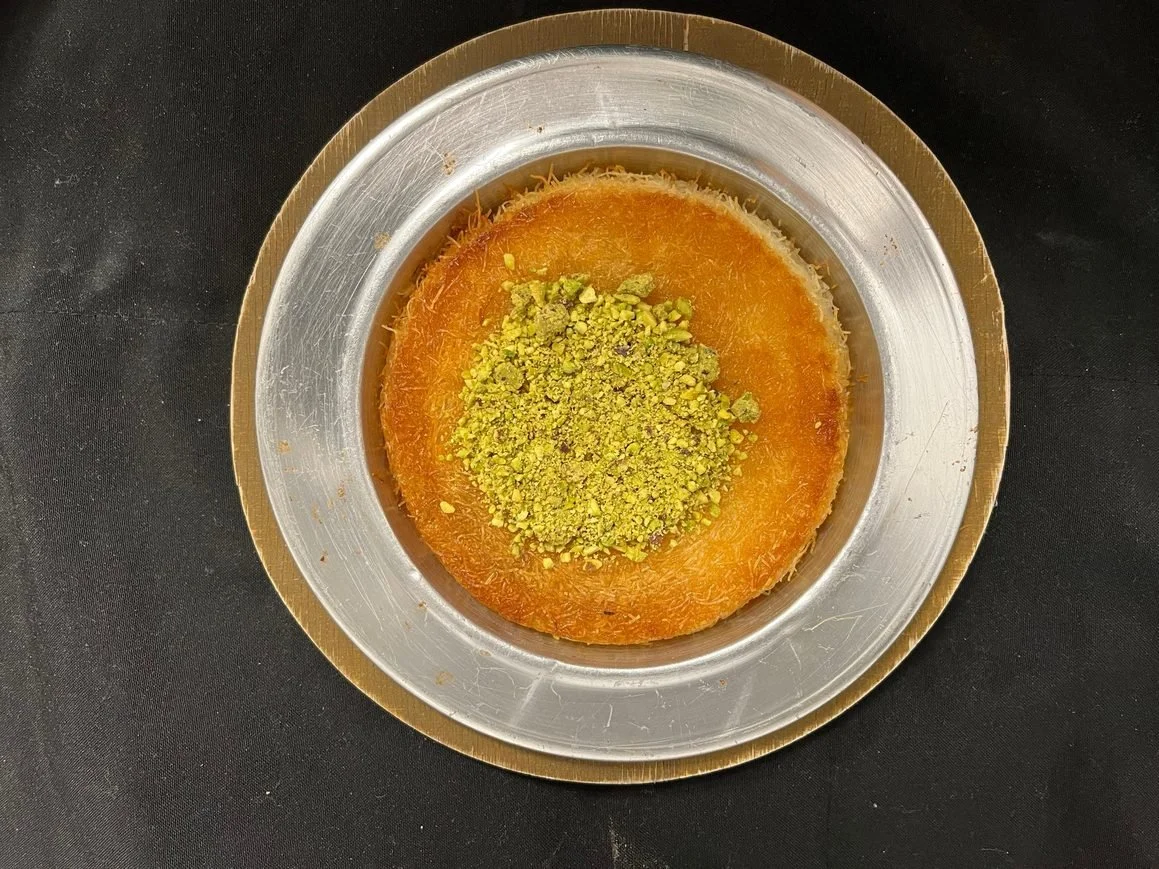
Künefe is a dessert that deserves far more international recognition than it currently receives. It is made from kadayıf, which is a shredded wheat dough that looks like very fine, pale noodles, layered with a soft, mild white cheese called peynir, baked until the outside is golden and crispy, then soaked in a light sugar syrup and served immediately while still hot. The combination of the crunchy, golden exterior and the melted, stretchy cheese interior, soaked just enough in syrup to add sweetness without overwhelming the savory quality of the cheese, is extraordinary. Künefe is a warm dessert and must be eaten within minutes of leaving the oven, which makes it a special experience rather than something that can be made ahead and reheated. It is often topped with crushed pistachios and sometimes with kaymak, the thick clotted cream of Turkish cuisine, which adds another layer of richness to an already complex dessert.
Muhallebi is a simple Turkish milk pudding thickened with rice flour and flavored with rose water, served cold and sometimes garnished with crushed pistachios or a dusting of cinnamon. It is one of the most ancient desserts in Turkish cuisine, with roots going back to the medieval Ottoman period, and it remains popular because it is genuinely delicious in its simplicity. The texture is lighter than a Western-style pudding, and the rose water gives it a floral quality that is distinctly Middle Eastern in character. It is the kind of dessert that feels like it has always existed, because in this part of the world, it essentially has.
Chocolate mousse cake represents the more modern end of Turkish and Mediterranean restaurant dessert menus, showing how the broader dessert tradition has absorbed and adapted international influences while maintaining the preference for restraint and precision over excess. A well-made mousse cake in this context tends to be less sweet than its French counterpart, with a denser, more deeply chocolate flavor and a smaller portion size that fits the Mediterranean philosophy of dessert as a closing note rather than a main event.
The full range of traditional Mediterranean desserts, from baklava and lokum to künefe and rice pudding, represents one of the most interesting and most historically layered sweet traditions in the world. Each dessert carries the story of the region it comes from, the ingredients that were available, the techniques that were developed, and the culture of hospitality that shaped how and when sweets were shared. For Bay Area diners who have only ever experienced Mediterranean food through its savory dishes, exploring the dessert menu at a Turkish and Mediterranean restaurant like Hummus Mediterranean Restaurant in San Francisco, San Mateo, Palo Alto, and Mountain View opens up an entirely different dimension of this cuisine, one that is equally worth knowing and equally worth savoring slowly.
