What Is Traditional Greek Mediterranean Food?
Ask a Greek grandmother how she cooks, and she will probably shrug and say she just uses what the land gives her. That shrug hides a lot. Behind it sits a food tradition that is thousands of years old, built on olive trees, sun-ripened tomatoes, wild greens, sheep and goat milk, and bread baked in a hot oven. Traditional Greek food is not fancy. It is careful, seasonal, and made to be shared.
Many people in the Bay Area meet Greek food through a gyro or a Greek salad, then wonder what else is out there. Others search for Greek and Mediterranean restaurants near them and are not sure how the two ideas fit together. This guide answers both questions. It explains what makes Greek cooking its own thing, walks through the classic dishes, shows how it connects to Turkish and Middle Eastern food, and gives practical tips for enjoying it around San Francisco.
The Heart of Greek Cooking: Simple Ingredients Done Well
Greek food is a part of Mediterranean cuisine, but it has a clear personality. The first thing to know is that olive oil is the center of everything. Greece has some of the oldest olive groves in the world, and families still press their own oil in many villages. It goes into the pot, over the salad, on the bread, and even into cakes. Because it is used so freely, Greek vegetables taste rich and silky without any cream or butter.
The second pillar is dairy. Feta is the famous one. It is a brined white cheese made from sheep milk, sometimes mixed with goat milk, and it tastes tangy, salty, and creamy all at once. Thick strained yogurt is just as important. It becomes a sauce, a dessert, and a breakfast. Other local cheeses, such as halloumi and graviera, show up in pies and on grills.
The third pillar is herbs and greens. Oregano is the herb most linked to Greece, and it grows wild on dry hillsides. Dill, mint, parsley, and thyme join it. Greeks also love wild greens called horta, which are boiled, drizzled with olive oil and lemon, and eaten as a side. Add lemon juice, garlic, and a little honey, and you have almost the whole flavor map of the country.
What stays the same across the islands and the mainland is the way meals are built. Vegetables, beans, and grains come first. Fish and seafood matter along the coast. Lamb and goat are saved for holidays and weekends. Dishes are often cooked slowly in the oven in a heavy pan until the sauce clings to the food. This gentle approach is a big reason why people call the Greek way of eating one of the healthiest in the world. It is also why healthy Mediterranean food in San Francisco has become such a popular search, since diners want food that tastes like home cooking and feels light afterward.
Classic Greek Dishes, From the First Bite to the Last
A traditional Greek table starts with small plates called mezedes. The best known is tzatziki, a cool mix of thick yogurt, grated cucumber, garlic, olive oil, and dill or mint. It is spread on bread, spooned over grilled meat, and used as a sauce for gyro sandwiches. Next to it you might find melitzanosalata, a smoky eggplant dip, and taramosalata, a pink spread made from fish roe. Stuffed grape leaves, called dolmades, are small rolls filled with rice and herbs and served with lemon. Hummus is also part of the wider Mediterranean table, and many Greek homes make a similar chickpea spread, so you will often see it beside the dips above.
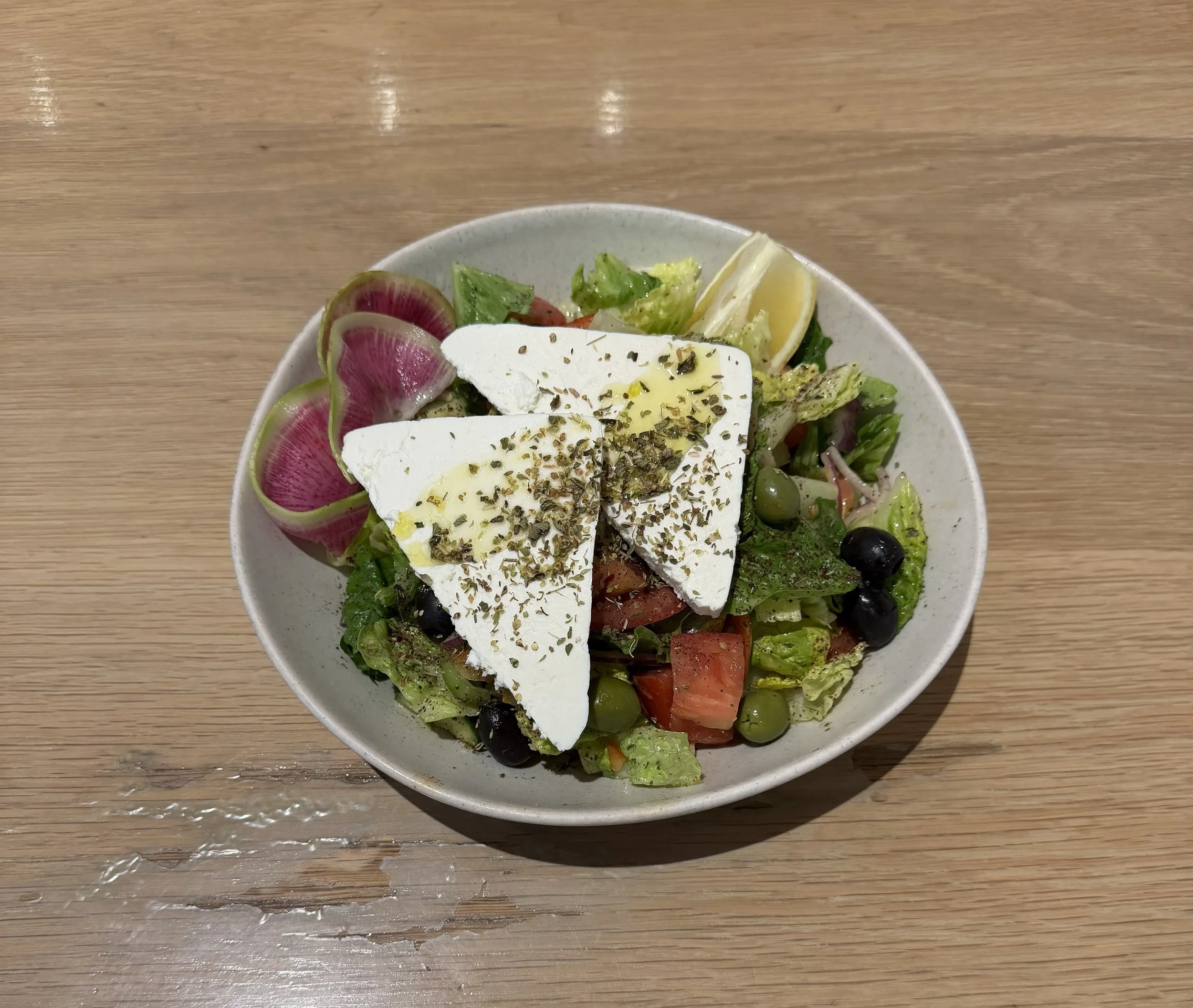
Salad comes next, and the Greek salad is the star. In Greece it is called horiatiki, which means village salad. Ripe tomatoes, cucumber, red onion, green pepper, and olives are piled on a plate and topped with a thick slab of feta, a pinch of oregano, and plenty of olive oil. Real horiatiki has no lettuce, though many restaurants outside Greece add romaine to make it lighter and easier to share. Either way, the dressing is simply oil and lemon or vinegar, and the flavor comes from good produce.
Then come the pies. Spanakopita wraps spinach, feta, eggs, and herbs in crisp, buttery filo dough. Tiropita does the same with cheese alone. They are eaten warm for breakfast, as a snack, or as part of a meal. Greek cooks also love baked and stewed dishes. Moussaka is the most famous. Layers of eggplant, potato, and spiced meat are covered with a thick béchamel and baked until golden. A vegetarian version swaps the meat for squash or extra vegetables. Pastitsio is a baked pasta with meat sauce and béchamel. Gemista are tomatoes and peppers stuffed with rice and herbs. Briam is a tray of roasted potatoes, zucchini, and tomatoes soaked in olive oil. Giouvetsi cooks lamb or beef with orzo in a clay pot until the sauce turns thick and rich.
Grilled food is just as loved. Souvlaki is cubes of meat on a skewer, brushed with lemon, oil, and oregano, and grilled over charcoal. It is sold on street corners all over Greece, wrapped in a soft pita with tomato, onion, and tzatziki. Gyro is the cousin made on a vertical spit. Meat is stacked in layers, roasted as it turns, and shaved into thin slices. Gyro sandwiches are one of the most loved forms of Mediterranean street food, and a lamb gyro in San Francisco is a lunchtime favorite for good reason. Keftedes, small seasoned meatballs flavored with mint and onion, are served hot with lemon.
Dessert closes the meal. Baklava uses layers of filo, chopped nuts, and syrup. Rice pudding is cool and creamy. Greek yogurt with honey and walnuts is simple and very satisfying, and a small cup of strong coffee often sits beside it. Greeks tend to keep sweets small and enjoy them slowly with company.
How Greek, Turkish, and Middle Eastern Food Connect
It is hard to talk about Greek food without talking about its neighbors. Greece and Turkey share a long history, and their kitchens swapped ideas for centuries. That is why you will find dolmades, baklava, yogurt sauces, stuffed vegetables, and grilled meats on both sides of the Aegean. The names change a little. Tzatziki in Greece is cacık in Turkey. Gyro in Greece is döner in Turkey. Moussaka appears in both countries, and Lebanon and Syria have their own versions of many of these dishes.
The differences are small but real. Greek cooking leans on oregano, lemon, dill, and olive oil. Turkish cooking brings more red pepper, cumin, sumac, and dried mint. Middle Eastern cooking often adds warm spices such as cinnamon and allspice. A Greek gyro usually comes with tzatziki, tomato, and onion, while a Turkish döner kebab might come with spiced yogurt and sumac onions. Greeks use feta and graviera, while Turks use beyaz peynir and kaşar. Once you taste them side by side, the family resemblance is easy to see, and so is the individual character of each one.
This overlap explains why one menu can serve all three traditions and feel natural. It also explains the rise of what some people call Greek Mediterranean fusion, where Greek salads, Turkish kebabs, and Levantine dips share the same table. Greek food also has a close link to halal cooking in practice, since lamb, chicken, beef, fish, and vegetables are the stars of most dishes. Traditional Greek cooking does include pork in some regions, so diners who follow halal rules should look for restaurants that source halal meat and prepare their grilled dishes accordingly.
Finding Greek and Mediterranean Food Around the Bay Area
The Bay Area is a great place to explore these flavors. People who search for the best Mediterranean restaurants in San Francisco or Mediterranean cuisine near them in San Francisco are usually looking for the same thing: fresh ingredients, grilled meats, bright salads, and warm bread. The city has many places that serve Greek food, SF Turkish restaurants, and Middle Eastern kitchens, and each adds its own spin. Food lovers who enjoy a long lunch or a relaxed dinner can build a whole routine around these cuisines, and many call the area a foodies paradise for exactly that reason.
At Hummus Mediterranean Restaurant in San Mateo, San Francisco, Palo Alto, and Mountain View, the menu brings Greek, Turkish, and Middle Eastern dishes together. Diners can find Greek salad, spanakopita, moussaka, dolmades, tzatziki, and Greek fries with parmesan, garlic, and feta, along with kebabs, gyros, falafel, and a range of hummus flavors served with warm pita. It is a halal restaurant, so the lamb, beef, and chicken are sourced with that standard in mind, and weekend breakfast adds Turkish and Mediterranean morning dishes. Anyone reading through the Hummus Mediterranean Kitchen menu before a visit will see how easily a table can mix Greek classics with Turkish grilled meats.
A few simple tips make a first visit easier. Start with two or three dips and a salad for the table, then add a main or two to share. If you like variety, a Mediterranean platter gives you a little of everything. Squeeze lemon over grilled dishes, scoop dips with warm pita, and save room for baklava or rice pudding. Families will find it easy to order, since grilled chicken, rice, fries, and pita are friendly to younger eaters, which is why many people look for family-friendly restaurants in San Mateo when planning a weekend meal. Couples and friends can pass plates and take their time, and a pot of tea or a glass of sangria adds a nice way to wine and dine Mediterranean style.
Takeout and delivery are simple choices too. Mediterranean takeout near me is a common search on busy nights, and kebabs, rice, wraps, dips, and salads travel well. For the best takeout Mediterranean food in SF, ask for sauces and dressings on the side so the pita and salad stay crisp, eat grilled meats soon after pickup, and order a little extra bread. Many people look at San Francisco takeout options for the office or choose Mediterranean food delivery in SF for a quiet night at home. Kebab takeout and larger catering trays are also handy for parties and team lunches.
Why Greek Food Has Lasted So Long
Traditional Greek food has survived for thousands of years because it is honest. It uses a short list of ingredients, treats them with respect, and serves them in a way that invites people to sit down together. The olive oil is generous, the herbs are fresh, the cheese is tangy, and the pace is slow. Nothing about it feels rushed or complicated.
For Bay Area foodies, that is good news. You do not need a special occasion to enjoy it. A Greek salad, a plate of grilled meat with tzatziki, and a warm piece of pita is a full meal that feels like a small vacation. Try one new dish on your next visit, share it with the table, and see how quickly it becomes a favorite among your Bay Area bites.
